
What size should your book be? A typesetter's guide for indie authors
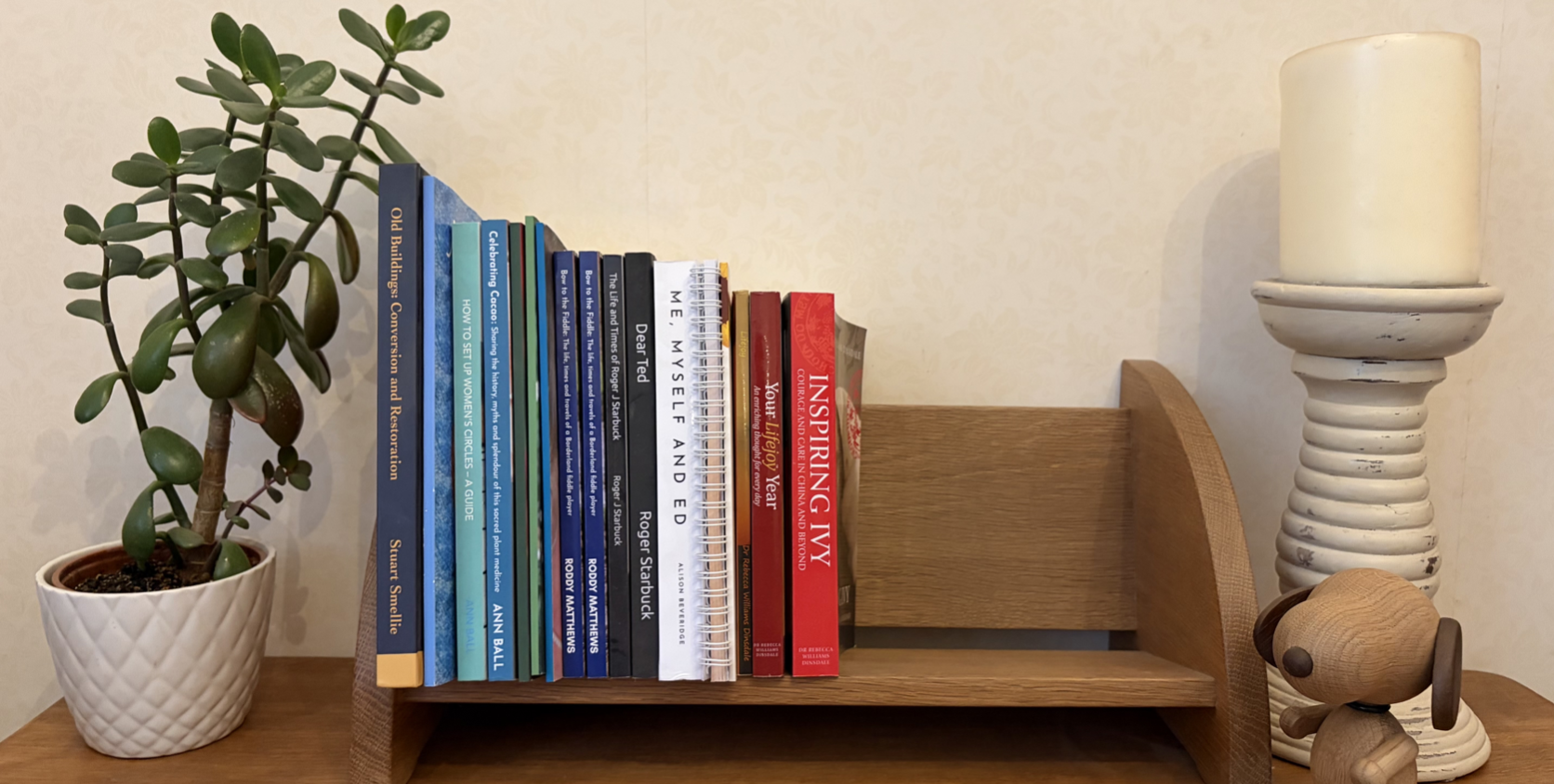
When indie authors think about publishing their book, they often focus on writing, editing, cover design, and marketing. But there's another important decision that can have a surprising impact on your readers' experience: the size of your book.
By size, I mean the page dimensions, while orientation is landscape or portrait. The dimensions of your book (known as the trim size) affect everything from readability and production costs to how professional your finished book looks. The good news is that you don't have to make the decision alone. Your typesetter can guide you through the options and help you choose a size that suits your book, your audience, and your budget.
Why book size matters
Book size is about much more than aesthetics. The dimensions you choose will influence:
The overall appearance of your book
The reader's experience
The number of pages
Printing costs
The amount of text on each page
How images and illustrations are displayed
Choosing the right trim size ensures your book looks professional and feels appropriate for its genre.
How are books measured?
Before you choose from the many standard book sizes available, it’s important to understand how books are measured:
Cover Dimensions: The height and width of your book’s cover are the primary measurements.
Spine Thickness: This indicates how thick your book is and is typically measured in millimetres for accuracy.
Trim Size: This is the final size of your book after it’s been bound and trimmed. Every measurement we discuss here refers to this ultimate, finished size.
Books are measured by the size of the cover: the height, width and thickness (spine size) in either mm or inches.
Consider industry standards
One of the first things I recommend is looking at books similar to yours. Different genres tend to have common sizes because readers have certain expectations. For example:
Novels are often published in sizes such as 5”x8" (12.70×20.32 cm) or 5.5”x8.5" (13.97x21.59cm)
Non-fiction books are frequently 6”x9" (15.24×22.86 cm)
Workbooks and guides may use larger formats such as A4 or US Letter
Children's books vary widely depending on the age group and illustration style
Browse your bookshelf or visit a bookshop and take note of books similar to yours. If most books in your genre are a particular size, there's usually a good reason.
Many indie authors publish their books on Amazon (or other digital marketplaces) using print-on-demand or as eBooks, so Amazon print sizes also need to be considered to avoid duplicating page layout work.
Note: Oh, and while you’re doing research in your genre and niche, open up the books and look closely at the fonts. Your chosen font will impact the size and spacing on the page; these measurements, along with the book size, will impact the final number of pages in your book. Selecting the font for your book is another big decision. You may have a favourite font, but you need to select a font that will be comfortable for your readers, fit with your book’s style and genre, and give you the most bang for your buck at the book size you’re using.
Think about your content
The content of your book should play a significant role in determining its size.
Text-Heavy Books
If your book is primarily text, a standard novel or non-fiction size will generally work well.
The goal is to create comfortable line lengths and sufficient white space so readers can enjoy the book without feeling overwhelmed.
Books with Images
If your book contains photographs, illustrations, diagrams, charts, or screenshots, a larger trim size may be beneficial.
Larger pages allow images to be displayed clearly without becoming too small to appreciate or understand.
This is especially important for: Memoirs with photographs, cookbooks, instructional guides, business workbooks, and children's books.
Consider the length of your book
The trim size you choose directly affects the final page count.
A larger book size can often accommodate more words per page, resulting in fewer pages overall. Conversely, a smaller book may require more pages to accommodate the same content.
This matters because page count affects:
Printing costs
Spine width
Book weight
Shipping costs
Think about reader comfort
Your readers will spend hours holding your book.
A compact novel is easy to carry and read on the go. A workbook may benefit from larger pages that allow room for notes. A coffee-table book is designed to be viewed rather than carried around.
Ask yourself:
Where will readers use this book?
Will they be holding it for long periods?
Will they need space to write in it?
Is portability important?
The answers can help guide your decision.
Budget considerations
As with many aspects of self-publishing, budget often plays a role.
Larger books generally:
Use more paper
Cost more to print
May incur higher shipping costs
However, choosing a size purely to reduce costs isn't always the best approach. A book that feels cramped or difficult to read will not provide the best experience for your audience. The aim is to balance quality, readability, and budget.
Book orientation
The orientation of your book’s pages (portrait/landscape/square, etc.) needs to be decided early, before any visual decisions about your book are made.
An author should really have a conversation with their illustrator, photographer, or book designer before they begin their work to ensure photos are the right aspect ratio and illustrations are created appropriately.
So, my advice is: if your book has visuals, select the book size and orientation early and communicate with all your contributors. It is also important to remember that any images you want to cover the whole page or spread (and bleed to the edge) need to be slightly bigger than the page to allow for some trim area around the edges of the paper when the book is produced.
Don't forget the cover
Your trim size determines the dimensions of your cover and spine.
A professional typesetter will calculate the correct spine width based on the final page count and printing specifications. Choosing your trim size early helps ensure the cover and interior design work together seamlessly.
How your typesetter can help
One of the benefits of working with a professional typesetter is that you don't have to navigate these decisions alone.
A typesetter can:
Recommend suitable trim sizes
Consider your images and content
Help balance page count and costs
Create a layout that looks professional and is comfortable to read
Having said this, it is always best for an author to do their own research and make the final decision about book size themselves, as it is more of a marketing decision than a design one.
If asking a printer
If a printer is asked for advice, they will consider other aspects such as press size, paper stock sizes and availability, run length and their familiarity with formats. As a result, different printers often give you different answers, and this can be very confusing!
So, if you are going to speak to a printer, choose one who is knowledgeable in book genres, and give them details on what you want and how many copies. In this way, you will have the page size finalised, ready for your typesetter. It can be expensive to change the page size after your book has been typeset.
Final thoughts
There isn't a single ‘correct’ book size. The best choice depends on your genre/niche, content, audience, budget, and publishing goals. By considering industry standards, reader experience, page count, and production costs, you can choose a trim size that supports your book, presents it professionally, and looks at home on any bookshelf.
I hope this helps xx
If you’re an aspiring author looking to publish your book, I'm here to polish your words and create a professional, reader-friendly publication for you. I would love to support you on your publishing journey.
Contact me for an editing and typesetting estimate; let’s make your book shine!